
How to Choose the Right Air Compressor Filter for Industrial Applications
By Parth Compressor SEO
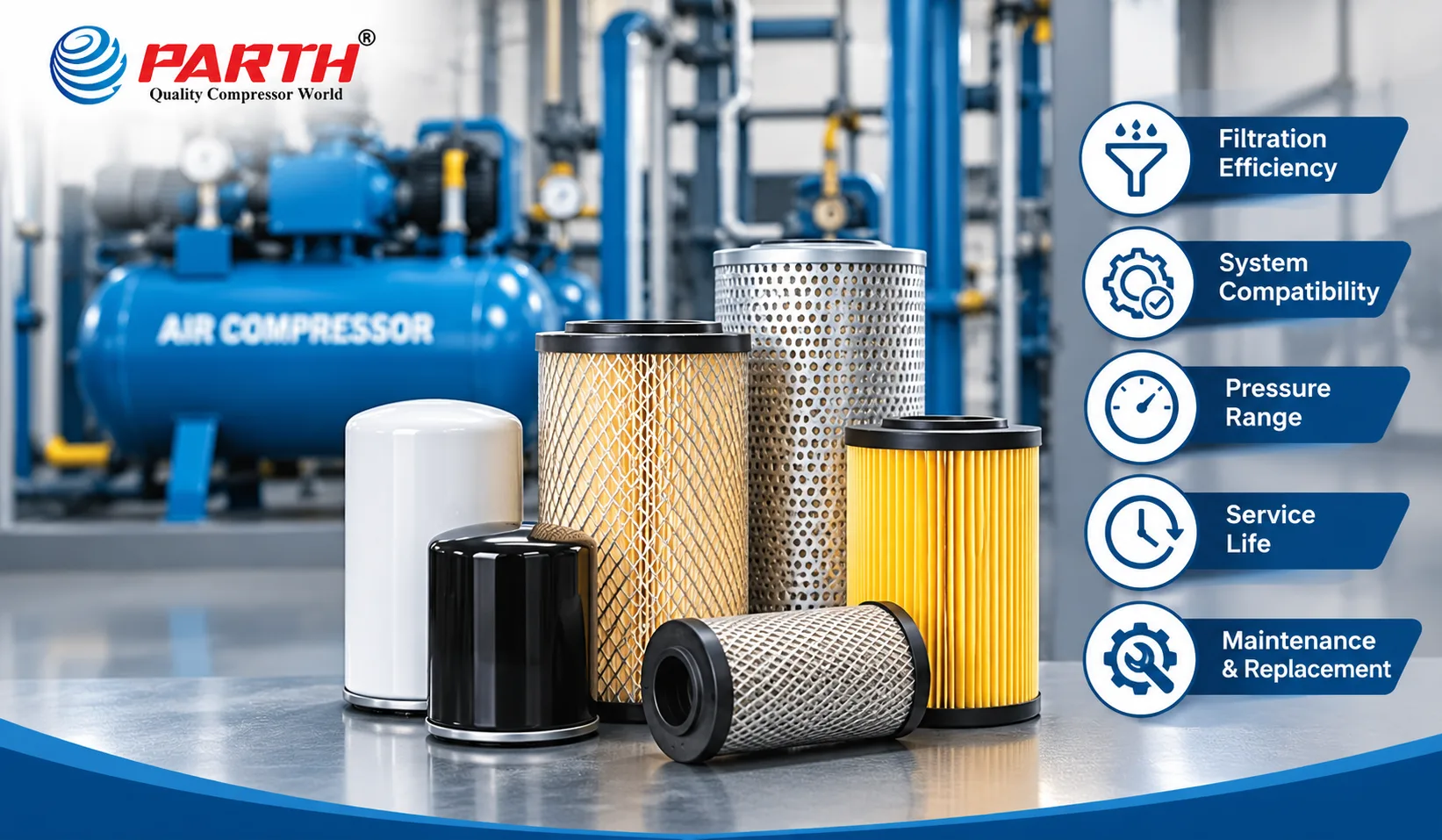
Compressed air is widely used across manufacturing, automotive, pharmaceutical, food processing and engineering industries. However, compressed air can contain moisture, oil aerosols, dust, rust particles and other contaminants that may affect equipment performance and product quality. Selecting the right filtration system is therefore essential for maintaining clean, reliable compressed air. Understanding the different types of Air Compressor Filters, their applications and maintenance requirements can help businesses protect machinery, reduce downtime and improve operational efficiency.
1. Understand the Quality of Compressed Air Required
Before selecting a filter, identify the required compressed air quality for your application. Different industries have different contamination-control requirements. For example:
Automotive workshops: Require filtration to protect pneumatic tools and equipment.
Food processing: May need stricter control of oil, moisture and particulate contamination.
Pharmaceutical manufacturing: Requires carefully controlled compressed air quality according to the application.
General manufacturing: Often needs filtration to prevent contaminants from affecting machinery and production processes.
Painting applications: Require clean, dry air to help prevent surface defects.
The required air quality should be established before choosing a filtration system. ISO 8573-1 is commonly used to classify compressed air purity according to particles, water and total oil.
2. Identify the Different Types of Air Filters
Industrial compressed air systems may require multiple filtration stages because different filters remove different contaminants.
Common types include:
Particulate filters:These remove solid particles such as dust, rust and other suspended contaminants.
Coalescing filters: These help remove liquid water droplets and oil aerosols by combining small droplets into larger ones that can be drained.
Activated carbon filters: These are used to reduce oil vapours and certain odours. They are generally installed after suitable upstream filtration.
Water separators: These remove bulk liquid water from compressed air, often before finer filtration stages.
A single filter may not address every contamination problem. The correct combination depends on the incoming air quality and the required output specification.
3. Check Flow Rate and Operating Pressure
Filter selection should match the compressor's operating conditions. An incorrectly sized filter may restrict airflow, create excessive pressure drop or fail to deliver the required performance.
Consider these factors:
Airflow capacity: Check the system's actual flow requirement, usually measured in CFM or m³/min.
Operating pressure: Ensure the filter is suitable for the system's working pressure.
Temperature: Confirm that the filter and its elements can operate within the expected temperature range. Pressure drop: Review the pressure loss across the filter at the required airflow.
Connection size: Ensure compatibility with the existing pipeline.
A filter should be selected using the manufacturer's performance data rather than connection size alone.
4. Evaluate Filter Quality and Compatibility
Filtration equipment must work reliably under industrial operating conditions. Poorly selected or incompatible components can affect performance and increase maintenance requirements.
When comparing Air Compressor Parts, check:
- Filter housing material and pressure rating.
- Filter element efficiency and rated capacity.
- Compatibility with compressor lubricants and operating temperatures.
- Availability of replacement elements.
- Seal quality and leakage prevention.
- Manufacturer specifications and technical documentation.
It is also important to check whether the filter is compatible with the compressor model and the wider compressed air treatment system.
5. Choose the Right Activated Carbon Filtration System
Some industrial processes require additional treatment to reduce oil vapours and odours that may remain after conventional filtration.
Businesses researching Activated Carbon Filter Manufacturers In India should evaluate more than the carbon material itself. The complete filtration arrangement and its operating conditions matter.
Important considerations include:
- Activated carbon quality and adsorption characteristics.
- Compatibility with the required airflow and pressure.
- Proper upstream removal of liquid water and oil aerosols.
- Expected service life under actual operating conditions.
- Replacement and disposal requirements.
- Technical support and product documentation.
Activated carbon filters have a finite adsorption capacity. They need timely replacement, and they should not be treated as a substitute for particulate or coalescing filtration.
6. Consider Moisture and Oil Removal Requirements
Moisture and oil contamination can cause corrosion, equipment damage and quality issues in industrial processes.
A suitable compressed air treatment arrangement may include:
- Moisture separators for bulk liquid removal.
- Refrigerated or desiccant air dryers, depending on the required dew point.
- Coalescing filters for liquid aerosols.
- Activated carbon filtration for oil vapour reduction where required.
The correct combination depends on the compressor type, ambient conditions, air demand and application. For example, applications requiring very dry air may need a desiccant dryer rather than relying on filtration alone.
7. Review Maintenance and Replacement Requirements
Even a correctly selected filter needs regular inspection and maintenance. Contaminants accumulate in filter elements over time, potentially increasing pressure drop and reducing filtration performance.
Establish a maintenance plan that includes:
- Monitoring differential pressure across filters.
- Checking automatic drains and condensate removal.
- Replacing elements according to manufacturer recommendations.
- Inspecting housings, seals and connections.
- Recording maintenance dates and operating conditions.
A differential pressure indicator can help identify when an element is becoming restricted. Replacement should follow the manufacturer's guidance and actual operating requirements.
8. Assess Manufacturer Support and Long-Term Costs
The purchase price is only one part of the total cost of an industrial filtration system. Businesses should also consider energy losses, replacement elements, maintenance labour and equipment downtime.
Before finalising a supplier, ask about:
- Technical assistance with filter selection.
- Product testing and performance specifications.
- Availability of spare parts and replacement elements.
- Warranty terms.
- Installation guidance.
- After-sales service.
A supplier that understands industrial compressed air applications can help select a suitable system and avoid unnecessary filtration stages.
Conclusion
Choosing the right industrial filtration system requires an understanding of compressed air quality, airflow, operating pressure, contamination levels and maintenance requirements. Businesses should compare filter efficiency, component compatibility, pressure drop and long-term operating costs before making a selection. A properly designed filtration arrangement can help protect equipment, maintain process quality and support reliable industrial operations.
Frequently Asked Questions
They remove contaminants such as dust, oil aerosols and moisture that may damage equipment or affect production quality.
There is no universal number. The filtration arrangement depends on incoming air quality, compressor type and the purity required by the application.
A coalescing filter removes liquid aerosols, while activated carbon filtration helps reduce oil vapours and certain odours.
Replacement frequency depends on operating conditions, contamination levels, pressure drop and manufacturer recommendations.
No. Different contaminants require different treatment technologies. A combination of filtration, moisture separation and air drying may be necessary.