
Choosing the Right High-Pressure Air System for PET Blow Moulding Operations
By Parth Compressor SEO
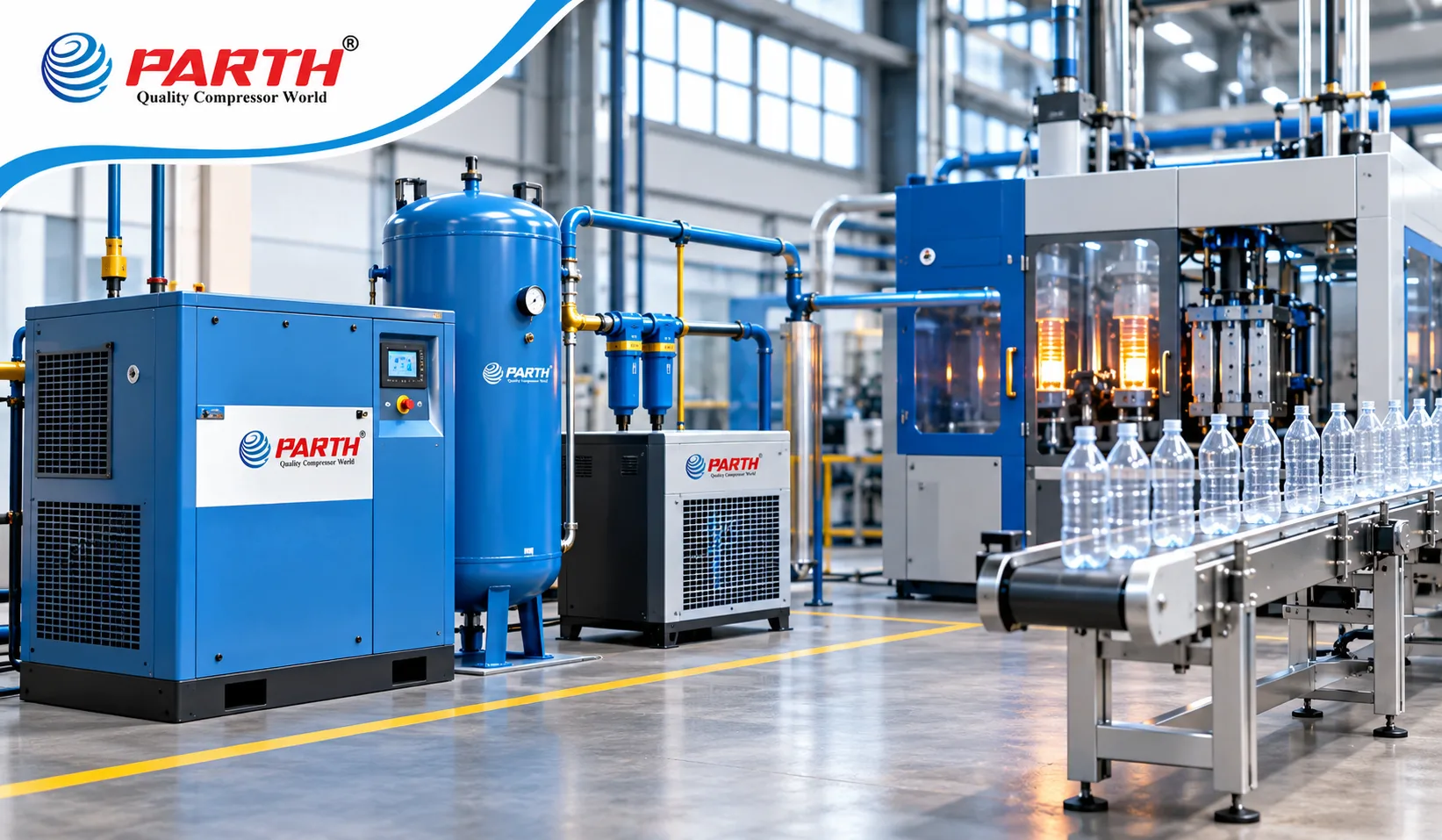
PET bottle manufacturing depends on a consistent supply of compressed air to shape preforms into bottles. The blow-moulding process requires considerably higher pressure than many conventional pneumatic applications, making compressor selection an important production decision. An unsuitable system can affect output consistency, energy consumption and equipment reliability. A High Pressure Air Compressor designed for the specific demands of PET processing helps maintain the pressure and airflow required throughout production. Parth Air Compressor develops industrial compression systems, including multistage solutions for applications where dependable high-pressure air is essential.
Understanding Pressure Requirements in PET Manufacturing
Stretch blow moulding involves heating PET preforms and expanding them inside moulds using compressed air. The process requires sufficient pressure and airflow to achieve the intended bottle shape, wall distribution and production speed.
Unlike general-purpose industrial equipment, these applications need compressors capable of delivering elevated discharge pressure without compromising operational stability. The required capacity depends on several factors:
- Bottle specifications: Bottle size, weight and design influence the amount of air required.
- Production speed: Higher output generally increases compressed air demand.
- Operating pressure: The compressor must meet the blow-moulding machine's specified pressure requirements.
- Air consumption: The combined demand of connected equipment determines the necessary flow rate.
Understanding these variables helps manufacturers avoid selecting equipment based solely on motor horsepower.
What Makes Multistage Compression Suitable for Demanding Applications?
A High Pressure Air Compressor Manufacturer must consider more than the final pressure rating when designing equipment for PET production. The compression process, cooling arrangement and operating conditions also influence performance.
Multistage compression divides the pressure increase across multiple stages rather than attempting to achieve the required pressure in one step. Intercooling between stages helps reduce the temperature of compressed air before it enters the next stage. This supports more controlled compression and can improve operating efficiency.
For example, Parth offers multistage PET compressors with configurations ranging from 15 to 75 HP, two or three compression stages, and air-cooled or water-cooled options. The range includes systems designed for discharge pressures of up to 40 kg/cm² and flow rates of 30 to 150 CFM, depending on configuration.
This makes it important to evaluate the complete technical specification rather than comparing machines on pressure alone.
The Role of Air Quality and Supporting Equipment
High-pressure generation is only one part of a dependable compressed air installation. Air quality, moisture control and storage capacity also influence the performance of downstream equipment.
Moisture in compressed air can create operational difficulties, particularly when production processes require controlled air conditions. An appropriately selected air dryer helps manage moisture, while filters can remove relevant contaminants depending on the installation's requirements.
An air receiver tank also plays a useful role by storing compressed air and helping manage fluctuations in demand. Its capacity should be selected according to compressor output, operating pressure and consumption patterns.
A properly planned installation may include:
- A compressor matched to the required pressure and flow.
- Suitable air treatment equipment.
- An adequately sized receiver tank.
- Properly rated pipelines, fittings and safety devices.
These components should be considered together rather than purchased as unrelated additions.
Selecting a Supplier Based on Technical Support and Reliability
Choosing a High Pressure Air Compressor Supplier involves evaluating the support available beyond the initial equipment purchase. A compressor is part of a larger production system, and its long-term performance depends on correct installation, maintenance and access to suitable replacement components.
Before making a decision, manufacturers should assess the following:
| Evaluation Factor | What to Check | |---|---| | Technical Suitability | Pressure, flow rate and duty requirements | |---|---|
It is also useful to discuss future production expansion before finalising capacity. A system selected only for present consumption may become inadequate when additional blow-moulding machines are introduced.
Practical Checks Before Installing a High-Pressure System
Before commissioning a compressor, verify that the complete installation meets the operating requirements of the production line. Check pressure ratings across pipelines, receivers and connected equipment. Confirm that electrical supply, ventilation and cooling arrangements are appropriate for the selected configuration.
Maintenance planning should include regular inspection of filters, lubrication requirements, cooling systems and safety devices, following the manufacturer's instructions. Monitoring pressure and air consumption can also help identify leaks or changes in operating demand before they affect production.
Conclusion
Selecting a suitable compression system for PET manufacturing requires attention to pressure, airflow, cooling, air treatment and long-term service support. Evaluating these factors together helps manufacturers build installations that meet production requirements without unnecessary capacity or operating costs. Businesses exploring a High Pressure Air Compressor in India should prioritise application-specific specifications and dependable technical assistance. A carefully selected system can support consistent bottle production, efficient operations and better equipment management over time.